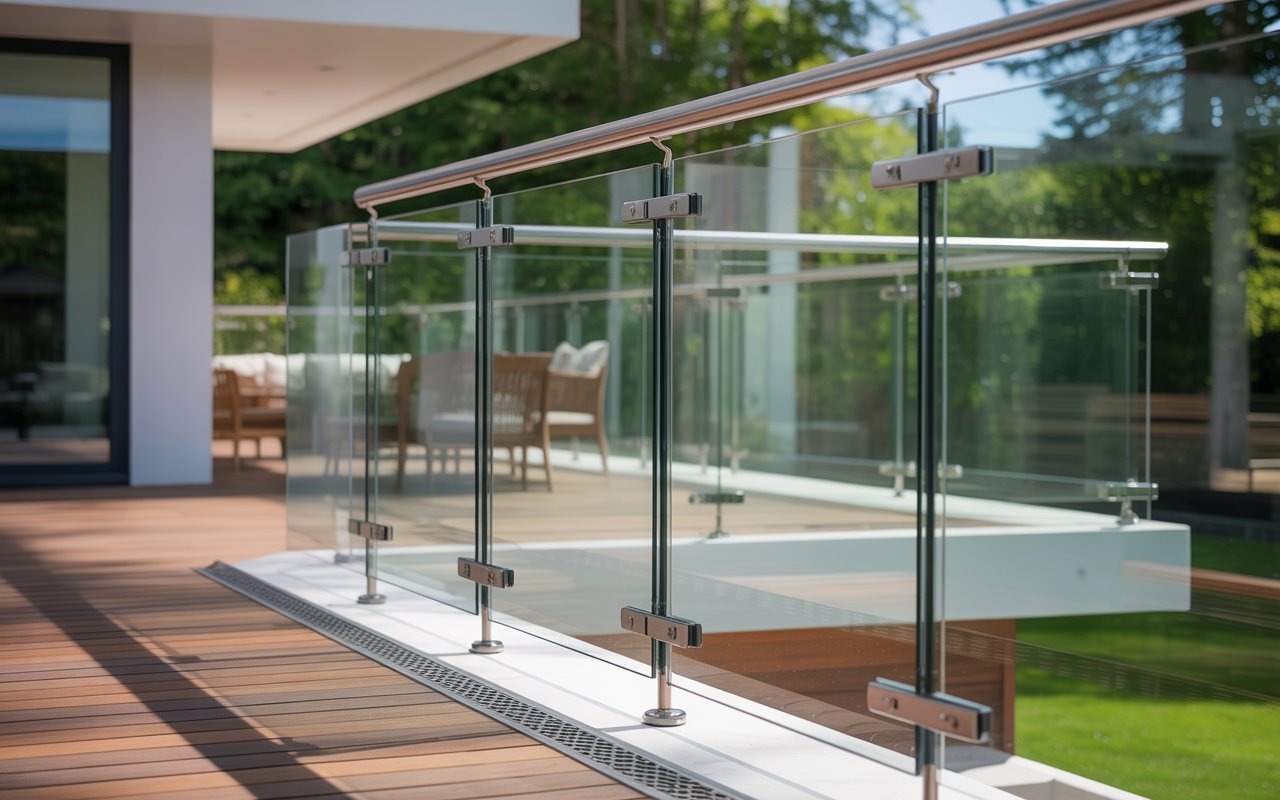
The beauty of glass deck railings cannot be denied. expose the outdoors, expand the room, and introduce a simplistic modernity to any house. But there is a question that must be asked, given all that openness: Is it safe? Many homeowners worry about glass breaking, bending under pressure, or losing stability over time.
As a matter of fact, correctly designed and installed glass deck railings comply (and even surpass) the safety requirements of the traditional railings. It is all about the correct materials, correct installation, and regular maintenance. This post describes how such systems comply with safety regulations, what makes them safe, and how it is possible to preserve them.
The Safety Standards Behind Glass Railings
Glass railing systems follow strict safety guidelines that define how much pressure, wind, and weight they can handle. All elements, such as glass panels, brackets, and frames, are thoroughly tested before being approved for use in either the home or business world.
What makes them dependable:
i) Tempered Glass: It is made of safety-rated glass. Tempered panels are heat-treated to be several times stronger than regular glass. If they do break, they crumble into small, rounded pieces that reduce the chance of injury.
ii) Laminated Glass: Made with two or more glass layers and a clear interlayer, laminated glass stays intact even when cracked, preventing sharp fragments from separating.
iii) Strength & Durability: These materials resist impact, weather, and UV exposure better than wood or metal, which can rot or rust.
iv) Structural Integrity: Systems are put to test to take heavy loads- usually about 200 pounds of concentrated forces and they are put up to very stringent building codes.
v) Secure Framing: Stainless steel or aluminum supports keep each panel firmly locked in place.
vi) Smooth Edges: Polished corners help prevent cuts or snags.
Meeting Local Building Requirements and Safety Rules
Glass deck railings are safe not by chance, but by design, implemented in local building codes and safety standards of a community. All installations should comply with these regulations so that the railing can be a stable protection.
Key requirements usually include:
• Height and Gaps: The majority of residential decks are to have railings that are at least 36 inches high and no gaps between them that allow a 4 inch ball to move through. This regulation prevents children or pets from slipping through.
• Top Rails (Cap Rails): Many systems require a continuous top rail for added strength and grip. In particular instances, however, laminated glass that fulfills particular load conditions may be used as a free-standing safety wall, provided that it is approved locally.
• Edge Security: Panels should be firmly attached to a solid foundation, such as floor-mounted clamps, side fixings, or a layer of base shoes, to ensure that there is no movement or vibration.
• Wind Load and Structural Testing: Glass and framing systems are pressure resistant to make it stable during heavy wind or force.
Since the rules may vary in different cities or housing communities, it is always advisable for homeowners to consult the local authorities or a qualified contractor before installation. Following these requirements ensures that your railing not only looks great but also meets safety expectations from day one.
The Crucial Role of Professional Installation
The safety of a glass deck railing depends as much on how it’s installed as on the materials used. Poor installation—not the glass itself—is the leading cause of railing failure.
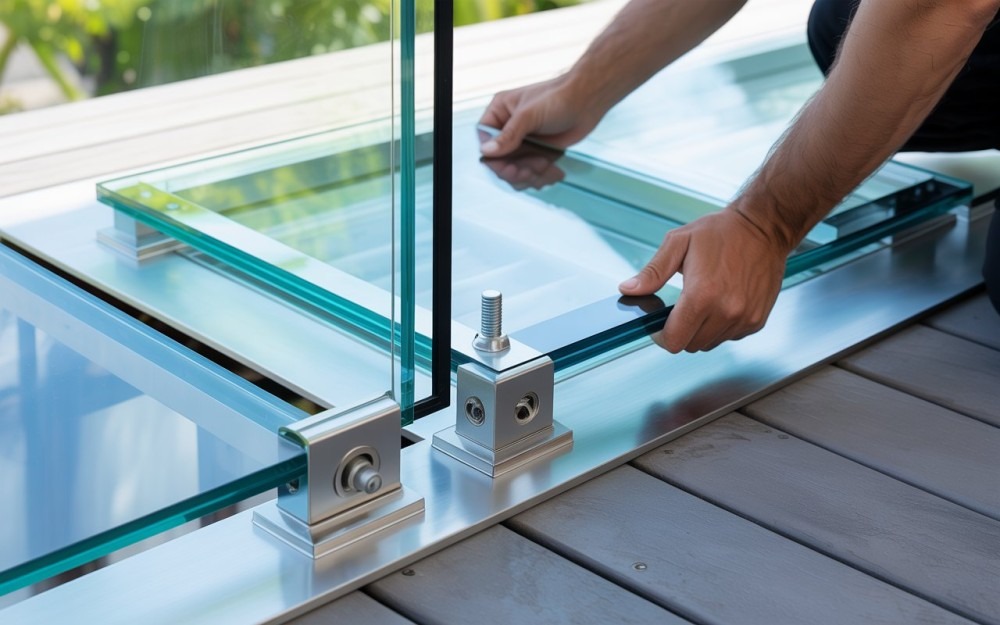
Professionals understand the importance of strong mounting surfaces and secure hardware. Decks must be stable enough to handle the combined weight and pressure of the glass and support fittings. Installers use the right fasteners—often through-bolts rather than lag screws—to ensure everything holds firmly in place.
Certified installers also follow spacing, alignment, and load-bearing standards while providing documentation for compliance with local codes. They test the finished structure to confirm that panels don’t shift, loosen, or vibrate.
Simply put, professional installation transforms a set of glass panels into a safe, lasting barrier that protects your family and property.
How to Keep Your Glass Railing Safe?
Once installed, glass railings require very little upkeep, but routine care helps them stay secure for years.
A few simple steps make all the difference:
• Routine Inspections: Inspect at intervals for small chips, cracks, and loose fittings. The solution to these issues stops additional harm.
• Proper Cleaning: Cleaning should be done with a soft cloth and non-abrasive cleaners to prevent any scratches on the glass or wearing off of metal hardware.
• Avoiding Abuse: The panels are not weak, but they should not be leaned on, kicked, or made to hold heavy objects. Use the railing as a protective barrier, and not as a load-bearing wall.
• Prompt Repairs: If you notice a crack or loose post, contact your installer or a glass professional immediately. Timely repair ensures the railing stays structurally sound and safe.
With basic attention, your railing will stay strong, spotless, and secure through all seasons.
Conclusion
Glass deck railings are a combination of style, openness, and security when the correct materials, professional installation, and regular maintenance are unified. They are rigorously safe and stand the test of weather and time, and maintain a wide and clear view.
Homeowners who follow building guidelines and trust qualified installers can enjoy a railing that’s as safe as it is beautiful.
For more details, visit https://davilaglassandmirror.com
Keep an eye for more latest news & updates on DailyNewsConsumer!
About the Author